


Compute Futures Contracts: What They Are and Why Investors Should Pay Attention
As artificial intelligence(AI) continues to reshape the economy, a new type of financial market could emerge around one of its most important resources - computing power. AI is changing more than the way we work, search for information, and interact with technology. It's also creating demand for something most people rarely think about.
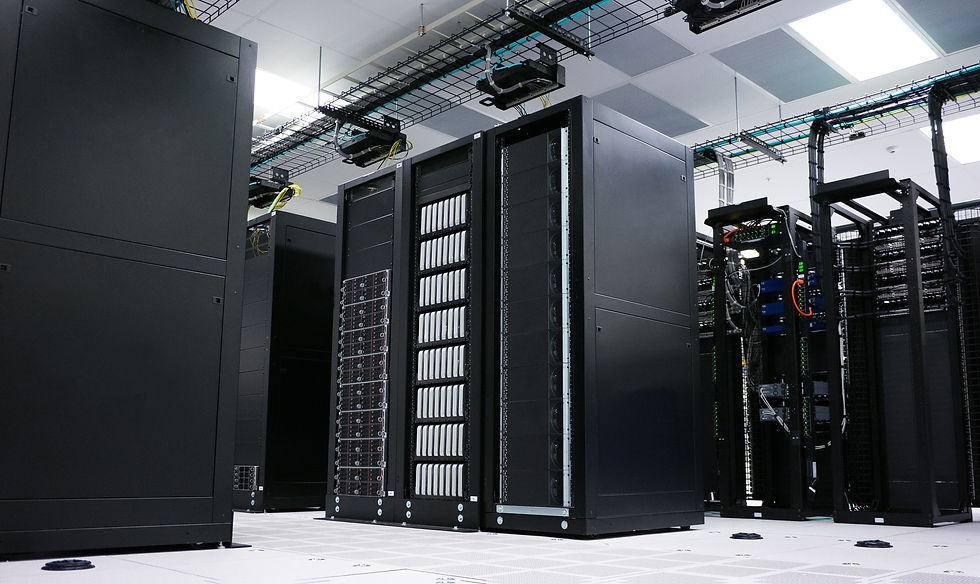
Every time an AI model answers a question, generates an image, or analyzes a large dataset, it relies on powerful computers housed in data centers. As businesses invest billions of dollars in AI, access to that computing power is becoming increasingly valuable.
That growing demand is creating interest in a relatively new financial concept - compute futures contracts. But what exactly are compute futures, how would they work, and why might they matter to investors?
Before looking into compute futures further, it helps to understand how traditional futures contracts work. A futures contract is an agreement to buy or sell something at a predetermined price on a specified date in the future. Think about a farmer growing wheat. The farmer doesn't know what wheat prices will be six months from now, but wants some certainty about how much the crop will sell for. By entering into a futures contract, the farmer can lock in a price today and reduce the risk of falling prices later. The buyer benefits from knowing what they'll pay, even if wheat prices rise.
Futures contracts have existed across markets such as energies, metals and agricultural products. Financial futures also allow investors to trade based on expectations for interest rates, stock indexes, and currencies.
The idea is basic - futures contracts help businesses manage price uncertainty while giving traders a way to speculate on future market movements. Now think about applying that same concept to computing power. Compute futures contracts are proposed or emerging financial agreements tied to the future price or availability of computing resources.
Instead of trading barrels of oil or bushels of wheat, market participants could trade contracts linked to computing capacity, such as the processing power provided by graphics processing units (GPUs). GPUs are specialized computer chips that play a major role in training and running AI models. As AI adoption increases, demand for these chips and the data centers that house them has increased.
Here's a real life example, a technology company knows it will need a significant amount of GPU computing power six months from now to train a new AI model. The company is concerned that computing costs could rise as demand increases. Instead of waiting and potentially paying a higher price, it enters into a contract that locks in a future price for a defined amount of computing capacity. If market prices rise, the company has protected itself against some of those higher costs. On the other side of the equation, a data center operator might use a similar agreement to secure future revenue. The concept resembles energy futures, except the underlying resource is computing power rather than electricity or natural gas.
Compute futures are not yet a single, standardized, widely established market like oil futures. Contract structures, trading venues, and settlement methods may vary, and some arrangements are better described as forward agreements or capacity reservations than exchange-traded futures.
Computing power is becoming very valuable, many are asking why, the answer largely comes down to artificial intelligence. Training advanced AI models requires a large amount of processing power. Running those models for millions of users creates additional demand.
Companies building AI products need access to computing infrastructure, while cloud providers and data center operators must make major investments in chips, electricity, cooling systems, and facilities. Unlike traditional software, where serving another customer can be relatively inexpensive, AI applications can require substantial computing resources every time they're used. This creates an interesting economic challenge. Computing capacity is expensive to build, demand can fluctuate, and prices can change depending on the type of hardware, location, availability, and length of the commitment. For businesses that rely heavily on AI, those fluctuations can make budgeting difficult.
That's where financial contracts tied to computing power could become useful. Although the market is still developing(compute futures could be released later this year pending regulatory approval according to the CME), compute futures could follow a structure similar to other commodity derivatives.
A contract might specify the type of GPU, the amount of computing capacity, the period during which it will be available, and the agreed-upon price. A contract could be based on 1,000 GPU-hours of a particular chip type for delivery during a future month. A GPU-hour generally represents the use of one GPU for one hour. If the current market price for a specific type of computing capacity is $3 per GPU-hour. A business expects prices to increase and enters into a hypothetical contract locking in $3.25 per GPU-hour for future use.
If the market price rises to $5, the contract could provide meaningful savings or financial protection, depending on its terms. If the price falls to $2, however, the company may end up paying more than it would have on the open market. That's the trade-off. Futures can provide greater certainty, but they don't guarantee the lowest price.
Contracts could also be financially settled, meaning no computing capacity actually changes hands. The parties would exchange payments based on the difference between the contracted price and a defined market benchmark.
Several types of businesses could have an interest in this market.
AI developers and technology companies could use compute futures to manage the cost of training and operating AI models. Cloud computing providers and data center operators could potentially use these contracts to manage revenue uncertainty and plan infrastructure investments. Financial institutions and trading firms might participate to provide liquidity or take positions based on their expectations for future computing prices. Large enterprises adopting AI could also benefit if computing expenses become a significant and unpredictable part of their operating budgets. For these companies, compute futures would primarily serve as a risk management tool rather than a speculative investment. Similiar to the way farmers use the futures markets. Individual investors could potentially trade compute futures too, although there are important limitations and lots of unknowns.
Traditional futures markets allow qualified market participants to gain exposure to changes in commodity and financial prices without owning the underlying assets. If standardized compute futures markets develop and become accessible through regulated trading platforms, investors may eventually have opportunities to trade based on expectations for computing demand and prices.
But compute futures would come with substantial risks.
Futures contracts can involve leverage, meaning relatively small price movements can create large gains or losses. Emerging markets may also have limited liquidity, uncertain pricing benchmarks, and fewer participants.
There's another complication - computing power isn't as interchangeable as many traditional commodities. A GPU's performance depends on its architecture, memory, software compatibility, and the workload it's being used for. Two computing resources may have very different values even if both are measured in GPU-hours. Creating reliable, standardized contracts around those differences will be one of the challenges facing the market.
For everyday investors, compute futures are therefore more of a developing market to watch than an established investment option. Like most markets, compute prices would largely be influenced by supply and demand.
Several factors could play a role on the path of compute futures. AI adoption, more businesses using AI could increase demand for computing capacity. GPU availability, shortages of advanced chips could push computing prices higher. Data center expansion, new facilities and infrastructure could increase supply and ease pricing pressures. Electricity costs, data centers consume significant amounts of energy, making power prices an important operating expense. Technology improvements, more efficient chips and AI models could reduce the computing resources required for certain tasks. Government policies, export restrictions, trade policies, and regulations could affect where advanced computing capacity is available.
Interestingly enough, strong growth in AI doesn't necessarily mean compute prices will always rise. If hardware becomes dramatically more efficient or companies build more capacity than the market needs, prices could decline even as AI usage continues to expand.
That's one reason this market could become particularly interesting to traders and businesses managing technology-related costs.
The emergence of compute futures reflects a broader shift in the economy.
For years, financial markets have developed around resources that businesses depend on, including energy, metals, agricultural products, and currencies. As AI becomes more deeply integrated into business operations, computing power could increasingly function like an essential economic input.
A liquid compute derivatives market could eventually help companies manage costs, improve price transparency, and support longer-term investment decisions.
It could also create new opportunities for financial institutions and investors seeking exposure to the economics of AI infrastructure. A lot will depend on whether the industry can establish trustworthy pricing benchmarks, consistent contract specifications, and enough market participation to support meaningful trading. Liquidity could be an issue, volume will be crictical.
But compute futures contracts represent an intriguing intersection of artificial intelligence, technology infrastructure, and financial markets. The idea is straightforward overall, as computing power becomes more valuable and its price becomes more important to businesses, companies may want financial tools to manage that uncertainty. Whether compute futures develop into a major asset class remains to be seen. But the concept highlights something important about the AI economy. The financial opportunities created by artificial intelligence may extend well beyond the companies developing AI software or manufacturing chips. They could also emerge in the markets built to buy, sell, finance, and manage the resources that make AI possible.
For investors, compute futures are worth understanding now, even if widespread trading opportunities are still taking shape.
Disclaimer: This article is for educational purposes only and should not be considered investment advice. Futures and other derivatives involve significant financial risk and may not be suitable for all investors.


Comments